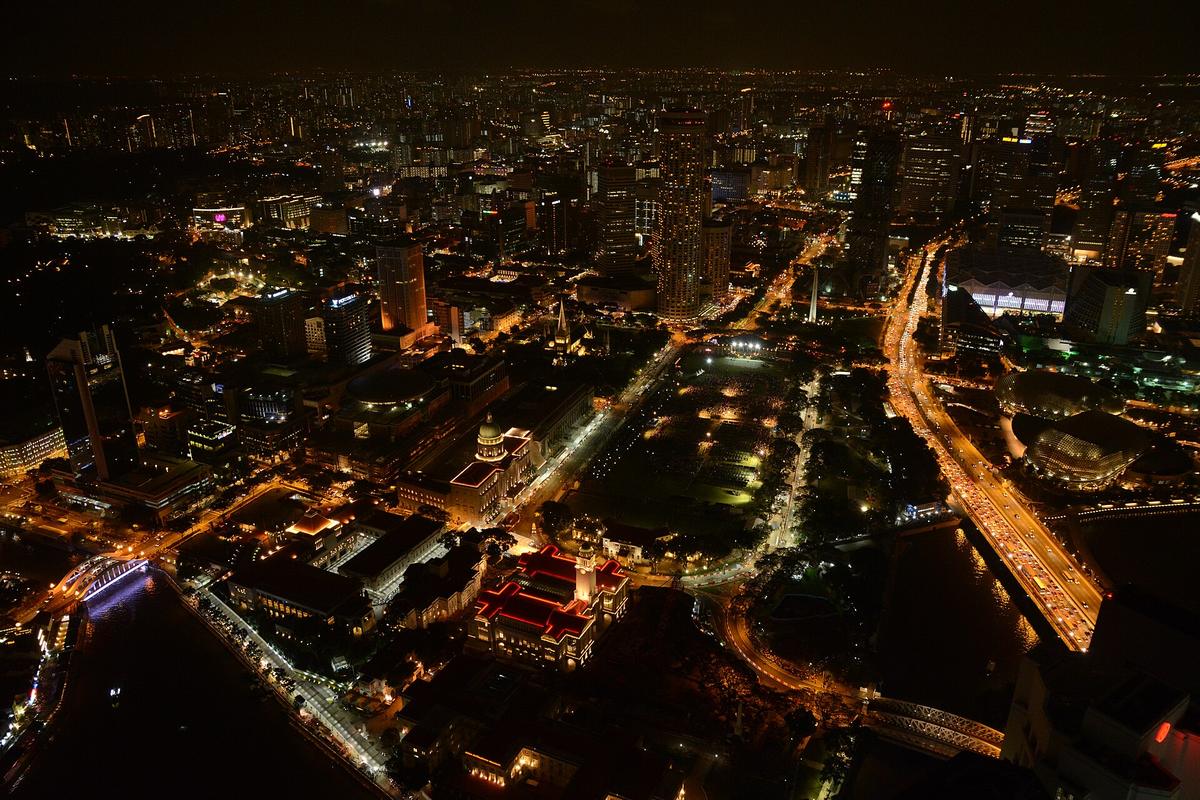
Civic District Evening Walk From City Hall to Boat Quay Along the River
Starting point at City Hall MRT
Begin the evening at City Hall MRT station, where the North-South and East-West lines intersect. Take Exit B and you will find yourself roughly a seven-minute walk from the National Gallery Singapore. This short approach gives you a moment to adjust to the pace of the Civic District after dusk, when the daytime heat has eased and the monumental architecture begins to catch the first spill of warm floodlighting.
The stretch between the station and the gallery is straightforward, but the real reward comes when the colonnaded facade of the former City Hall comes into view. Rather than rushing straight to the entrance, pause on the wide pavement opposite to take in the full sweep of the building. The transition from the modern train station to this 1929 landmark sets the tone for a walk that moves through layers of Singapore's civic and commercial history, all within a compact, pedestrian-friendly loop.
National Gallery Singapore and the Padang
The National Gallery Singapore occupies two national monuments at 1 St Andrew's Road: the former City Hall, completed in 1929, and the former Supreme Court, completed a decade later in 1939. The gallery's evening presence is striking, with the linking veil of metal and glass glowing softly above the historic stonework. While the gallery's opening hours are subject to change, the building itself is a public sight worth circling even if the galleries have closed for the day. Check the National Gallery Singapore visitor information page before your visit to confirm current operating times.
Directly opposite the gallery lies the Padang, one of Singapore's oldest open spaces for public recreation. Its significance runs deep: this was the site of the first National Day Parade held after Singapore became a republic in 1966. In the evening, the field opens up a long, unbroken view across to the Singapore Recreation Club and the skyline beyond. Standing at the gallery's front steps and looking out across the Padang gives you a clear sense of how this green expanse has anchored civic life for generations, a quiet counterpoint to the restaurants and bars you will encounter later along the river.
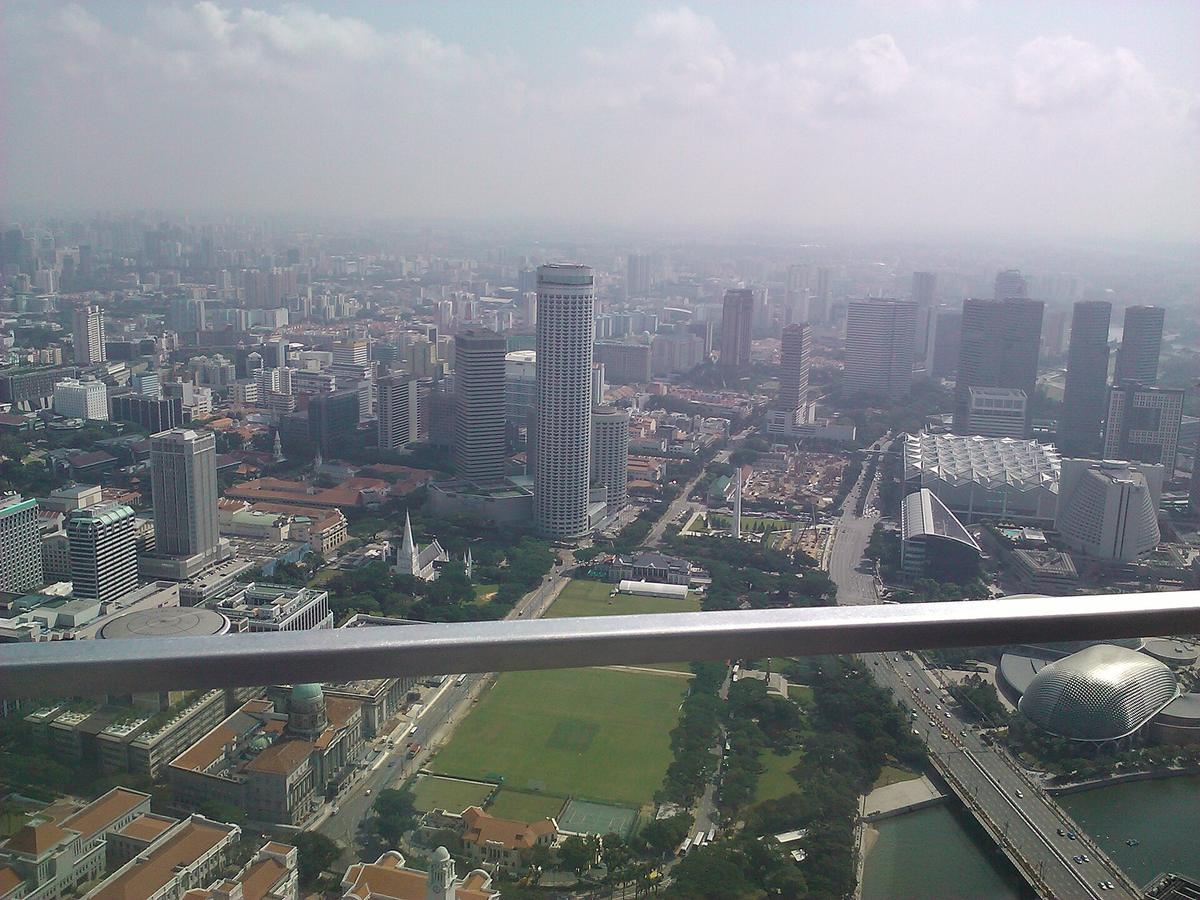

Victoria Theatre and Victoria Concert Hall
From the National Gallery, walk west along St Andrew's Road and then turn left onto Empress Place. At number 9 you will reach Victoria Theatre and Victoria Concert Hall, Singapore's oldest performing arts venue. The complex is actually two buildings joined by a 54-metre clock tower, whose clock was set in motion in 1907. The pale facade and the dark spire of the tower make a handsome silhouette against the evening sky, and the public foyer areas are typically accessible during the day and early evening, though auditorium entry requires a performance ticket or a booked heritage tour.
If you are interested in climbing the clock tower, be aware that the tour has specific requirements, including a minimum age of 18 and a reasonable level of physical fitness. The Arts House Group, which manages the venue, is the authority to consult for current tour availability and any access conditions. Even without entering, the building's exterior and the surrounding Empress Place lawn offer a pleasant pause before you continue toward the river.
Asian Civilisations Museum and Empress Place
A short stroll further along Empress Place brings you to the Asian Civilisations Museum, housed in the former Empress Place Building. Originally built in 1867, the structure itself is a piece of the district's layered history. The museum's permanent galleries are free for Singapore citizens and permanent residents, making it a worthwhile stop if your timing aligns with its operating hours. For everyone else, admission charges apply, and special exhibitions carry separate ticketing. Before relying on any pricing or opening schedule, verify the details directly with the Asian Civilisations Museum, as both are subject to change.
Even if you do not step inside, the building's neoclassical riverside frontage is worth appreciating. From here, the Singapore River Promenade begins to unfold. The promenade is a 2.4-kilometre park connector that runs from Kim Seng Road to North Boat Quay. It is wheelchair-friendly and lit nightly from 7.00 pm to 7.00 am, which means your entire evening walk will be comfortably illuminated once the lights come on.
The three national monument bridges
The next leg of the walk takes you across a trio of historic bridges, each with a distinct character. Cavenagh Bridge, opened in 1869, is the oldest bridge in Singapore that still exists in its original form. It was converted to a pedestrian-only crossing after Anderson Bridge opened in 1910, and today its suspension structure and period signage make it a favourite spot for an unhurried evening photograph. Anderson Bridge, just beside it, was fully pedestrianised from the end of December 2021, closing it to all vehicular traffic to improve walkability in the Civic District. Together, the two bridges create a seamless pedestrian link across the river mouth.
Further upstream, Elgin Bridge connects North Bridge Road to South Bridge Road. The present structure opened on 30 May 1929 and features cast-iron lamp posts and bronze lion roundels designed by the Italian sculptor Cavalieri Rodolfo Nolli. In the evening, the lamp posts cast a soft glow that highlights the roundels and the bridge's elegant railing details. Cavenagh Bridge, Anderson Bridge and Elgin Bridge were collectively gazetted as the Singapore River Bridges, Singapore's 73rd national monument, on 15 October 2019. Crossing all three in sequence gives you a tangible sense of how the river's crossings evolved from the 1860s to the 1920s.
Boat Quay and the conserved riverfront
On the south bank of the Singapore River, Boat Quay was gazetted as a conservation area on 7 July 1989. Its restored 19th-century shophouses and former godowns now house a dense strip of restaurants and bars. In the evening, the low-rise row of painted facades reflects across the water, and the promenade fills with diners and people simply enjoying the river breeze. The contrast with the formal civic buildings you passed earlier is deliberate and pleasing: this is the commercial heart of the old port, repurposed for leisure without losing its architectural grain.
This is a natural place to end the walk, whether you choose to sit down for a meal or simply continue along the promenade. The lighting along the Singapore River Promenade remains on until 7.00 am, so there is no pressure to rush. If you prefer a quieter spot, walk a little further upstream beyond the main cluster of shophouses; the promenade continues and the crowd thins out noticeably.
Optional detour to The Arts House
If you have extra time and prefer a slightly longer route, you can loop back from Boat Quay toward the present Parliament House complex. Beside it stands The Arts House, formerly the Parliament House and likely the oldest surviving civic building in Singapore. It housed the Legislative Assembly and later the Parliament until 1999. The building is not always open to the public in the evening, and any programming depends on the events calendar, so it is best treated as an exterior sight on this walk. Its restrained colonial architecture, viewed from the lawn or the riverfront, adds a final historical note before you head back toward the City Hall area or onward to other parts of the city.
Sources and verification
- nationalgallery.sg — Research source checked for this guide
- nationalgallery.sg — Research source checked for this guide
- roots.gov.sg — Research source checked for this guide
- artshousegroup.sg — Research source checked for this guide
- acm.nhb.gov.sg — Research source checked for this guide
- roots.gov.sg — Research source checked for this guide